
Montebello ZIP Code Coverage
Montebello's confirmed ZIP code directory starts with 90640. USPS lists the Montebello Post Office at 145 N. 5th Street, Montebello, CA 90640-9998. The city's general contact address uses it. So does the Montebello Library. That makes 90640 the principal confirmed street-delivery ZIP for Montebello, though postal coverage can cross an incorporated city line, so treat the code as a delivery clue rather than a legal boundary.
| ZIP | Areas covered | Post office | Notes |
|---|---|---|---|
| 90640 | Montebello street delivery; postal edges need address verification | Montebello, 145 N. 5th Street | Principal verified ZIP |
| 90641 | Not established in an accessible official USPS result | Not verified | Often described as PO-box-related by nonofficial data; confirm before use |
The second row stays cautious on purpose. USPS publishes no authoritative current result that fixes the scope of 90641. A postal directory should never turn a repeated nonofficial label into a settled coverage claim. Check the exact address through USPS first.
90640 and Fifth Street Post Office
Montebello's post office entry lists 145 N. 5th Street and ZIP 90640-9998. Retail hours run 9 to 6 on weekdays. Saturday hours are 9 to 3. The ZIP+4 extension sharpens delivery routing. It does not identify a parcel owner, household, council district, or neighborhood.
Treat the listing as the verified city-and-ZIP pairing. Then run the exact address through USPS. A preferred city line can differ from the incorporated boundary, and one street can cross a service, school, tax-rate, or council boundary along its length. The Montebello Post Office entry is the official source for the location and retail hours.
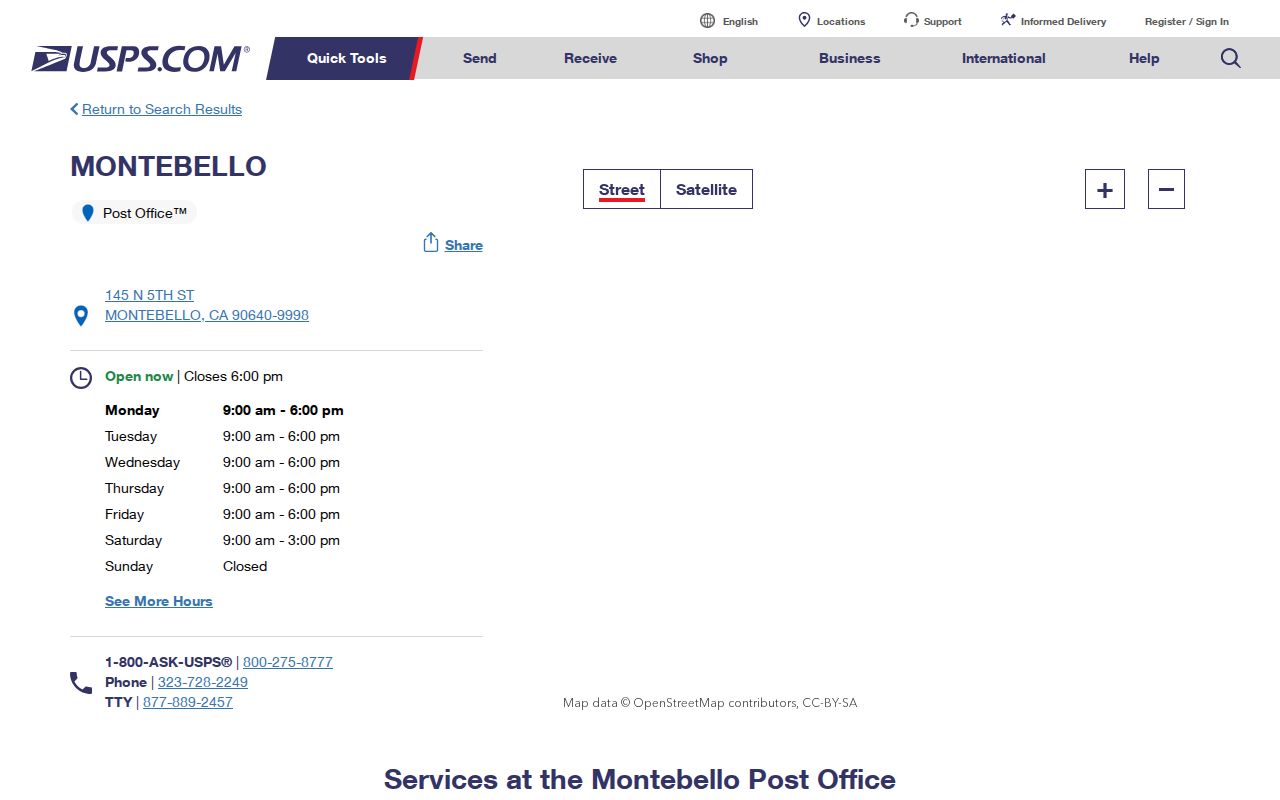
Code 90640 rests on an official postal source. The street-level lookup still decides which ZIP applies to any individual Montebello address.
90641 Needs Address Confirmation
Some datasets tie 90641 to Montebello PO boxes. USPS publishes no authoritative result fixing its coverage. Call it unverified in this ZIP code directory. Don't assign the code to a street, post office, parcel, or Montebello resident without an official address result.
A PO-box ZIP is not street delivery. A unique ZIP can serve a single institution. A carrier route is an internal delivery path, and ZIP+4 narrows routing inside a five-digit code. Each term describes postal handling, never property ownership or who lives at an address.
- ZIP code
- A five-digit postal routing area used to sort and deliver mail.
- ZIP+4
- A four-digit extension that narrows delivery inside a five-digit ZIP.
- PO-box ZIP
- A code used for box delivery that may not represent ordinary street delivery.
- Carrier route
- A delivery sequence inside a postal area, not a city or parcel boundary.
With no official result, mark the gap. An honest unknown beats a false neighborhood map, and current confirmation should come straight from USPS.
Find Residents by ZIP Code
Use a four-part handoff. First, normalize the delivery address. Next, let the assessor identify the parcel. Then choose a record set allowed to answer the person or property question, and narrow from ZIP to street or AIN. The assessor's open Basic Search accepts an address or AIN, not a verified ZIP-wide resident filter for Montebello.
- Run the address in the USPS ZIP Code Lookup and save the standardized city, state, ZIP, and ZIP+4.
- Use the Los Angeles County Assessor Portal to capture situs, AIN, legal description, and map location.
- Choose the relevant source: permit or parcel for an address, RR/CC for a deed or vital copy, or a public state register for a business or license clue.
- Move from ZIP to a particular street, parcel, or name before interpreting a result.
The voter verification form asks for a ZIP too. It works only alongside last name, birthdate, and residence house number. The form confirms a person's own registration match. It cannot produce a ZIP-wide list. A county street index is a regulated product with a permitted political purpose, not an unrestricted Montebello ZIP directory.
The Montebello by-street workflow takes over once the ZIP has narrowed the address, and the USPS lookup screen is the source for the postal normalization step.
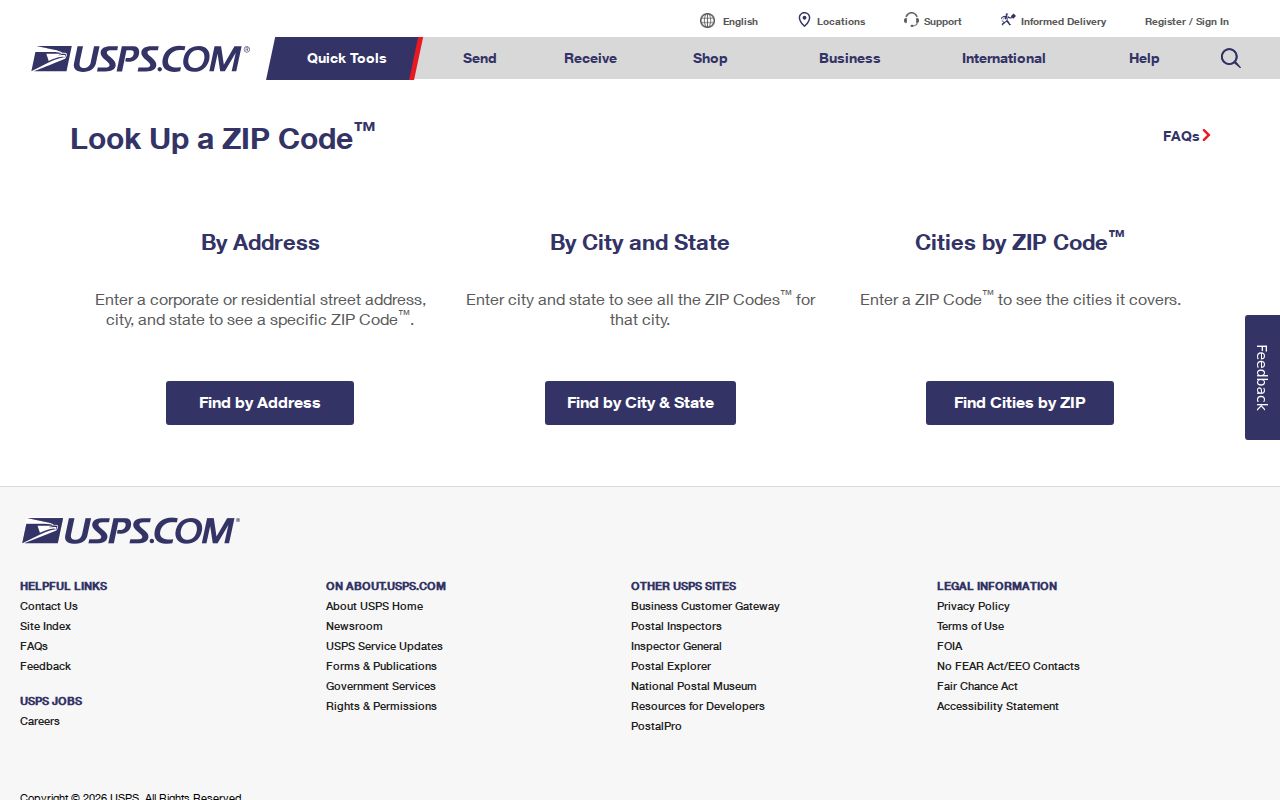
The USPS page shows why the address comes first.
USPS Fields and Record Handoffs
The postal tool offers several search modes. Match the mode to the clue at hand. A city-and-state lookup returns ZIP possibilities, an address lookup normalizes a delivery line, and a cities-by-ZIP mode tests the postal label without claiming city jurisdiction. Keep each result separate from the next custodian's data.
| Address lookup | Street address, city, and state to return a postal ZIP result. |
|---|---|
| City and state | Postal ZIP possibilities for a named place, subject to USPS matching. |
| Cities by ZIP | Postal place results associated with a ZIP, not incorporated boundaries. |
| ZIP+4 result | More specific delivery routing after the street address is accepted. |
| Next handoff | Assessor address or AIN search; USPS does not establish parcel ownership. |
The Assessor Portal comes next. Its Basic, Legal, and Map tabs take an address or AIN. The map can show ZIP and community layers, yet a ZIP never substitutes for the parcel identifier in a Montebello records search.
Voter ZIP Fields Have a Limit
LA County's voter form uses ZIP as one credential. Last name, birthdate, residence house number, and ZIP are all required. A self-match works for the person alone. It returns that person's registration status and election information. It cannot browse a Montebello postal directory. Nor can it list every voter, reveal ballot choices, or disclose protected address data.
California Elections Code sections 2188 and 2194 and Government Code section 7924.000 restrict voter files. Authorized products include individual voter history, certified registration, county files, city or precinct information, and street-index pages. Fees and purposes differ by product. Street-index pricing confirms that by-street visibility is regulated, not an open ZIP filter, and the LA County voter verification form shows the four required fields.
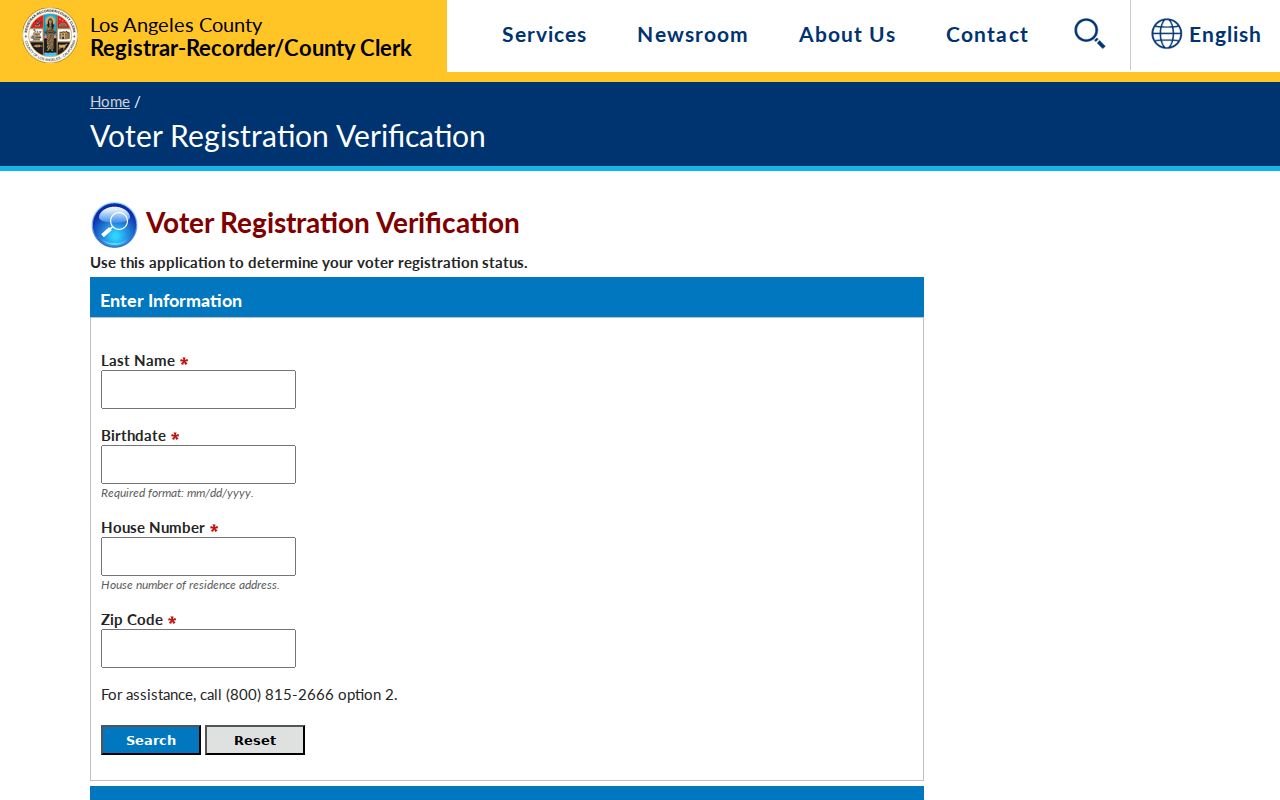
A ZIP credential and a ZIP-wide resident search are two different things. The captured verification screen makes that split plain. One confirms a single voter; the other is a restricted bulk product. Authorized county voter-file requests go through the Elections Information office at 12400 Imperial Highway, Room 2013, Norwalk, reachable at (800) 815-2666, option 4. The county's current request form and purpose rules govern the process. When a self-check is not the right product, the county voter-information route opens the authorized channel, and the county request form listing points to the individual voter-history and certified-registration path.
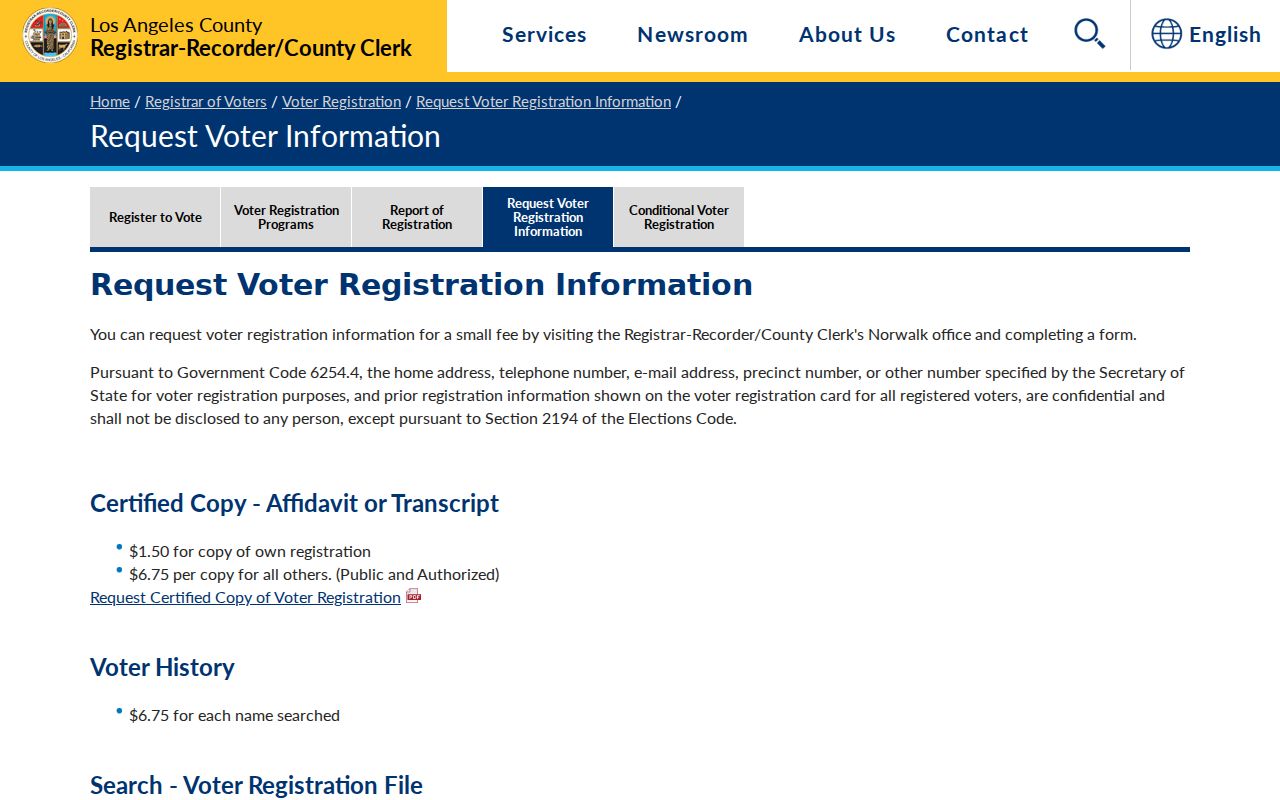
The county voter channel runs on a request form for authorized voter-record access. No ZIP-wide public browse comes with it.
ZIP and Montebello City Limits
A ZIP code routes mail. Nothing more. It does not draw Montebello's incorporated boundary, assign parcel ownership, set a council district, or fix a school attendance area. It says nothing about tax-rate areas or neighborhoods either. Postal labels and municipal lines often disagree. A preferred city line can pair with a ZIP that spills past the exact city edge. A parcel well inside Montebello's city limits may carry a postal name tied to a neighboring place. That surprises people who assume the two match. They are separate facts. Treat the city line as one question and the postal line as another, and check each against its own source rather than letting a ZIP code stand in for both.
Boundary check. Verify USPS delivery, Assessor situs and AIN, Montebello city limits, and council district as four different geographies.
Layered maps tell a richer story than a ZIP code ever can. On the Montebello assessor map, you can toggle cities, communities, ZIP Codes, school districts, supervisorial districts, and tax rate areas all at once. The city's own district maps go further. They mark roads, hills, parks, schools, historical areas, homeowner associations, and transportation corridors as possible communities of interest. Treat each layer as its own fact. Flattening them into a single postal label hides the boundaries that matter. Those boundaries shape a resident lookup or parcel search. After postal normalization and parcel identification, Montebello district geography becomes a practical next step.
Four Montebello Geographies
Layered maps make the picture clearer. The assessor viewer can add cities and communities. It can also add ZIP codes, school districts, supervisorial districts, and tax-rate areas. The city's district maps add roads, hills, parks, and schools. They include historical areas, homeowner associations, and transit corridors as communities of interest. Resist the urge to flatten all of that into one ZIP label. Montebello district geography works best after postal normalization and parcel identification.
| Geography | Question answered | Keeper | Do not infer |
|---|---|---|---|
| Postal | Where USPS routes the mail | USPS | City jurisdiction or owner |
| Situs / parcel | Which taxable land unit is at the address | LA County Assessor | Every occupant |
| City / district | Which municipal and council geography applies | Montebello maps | Postal delivery route |
| Service area | School, tax, or other local boundary | Relevant agency | Family or resident identity |
An address that looks inconsistent is worth checking against all four geographies. ZIP lines, city limits, and district boundaries each follow their own logic. Keep them straight. A ZIP never decides who owns a deed. A city line never settles title, and no district map hands out a resident roster of its own.
ZIP Questions at the County Clerk
Not every resident clue runs through the post office. Some of it lands with the Los Angeles County Clerk instead. That office keeps marriage licenses, fictitious business names, notary filings, domestic partnerships, and professional registrations. A ZIP can narrow where a form was filed or catch a spelling variant. It is not a record key. Search by filing type first, then by the exact person or business name.
For a record that Montebello itself created, a focused California Public Records Act request can help. It can ask City Hall for one identifiable, existing file. The law usually gives an agency ten calendar days to respond. A fourteen-day extension is allowed for unusual circumstances. Statutory limits still control. Vital records, voter data, juvenile files, DMV material, and sealed cases stay off limits. Safe at Home protections stay off limits too. None of this changes no matter how the request is framed.
The LA County Clerk service page lists the filing categories handled on the county side.
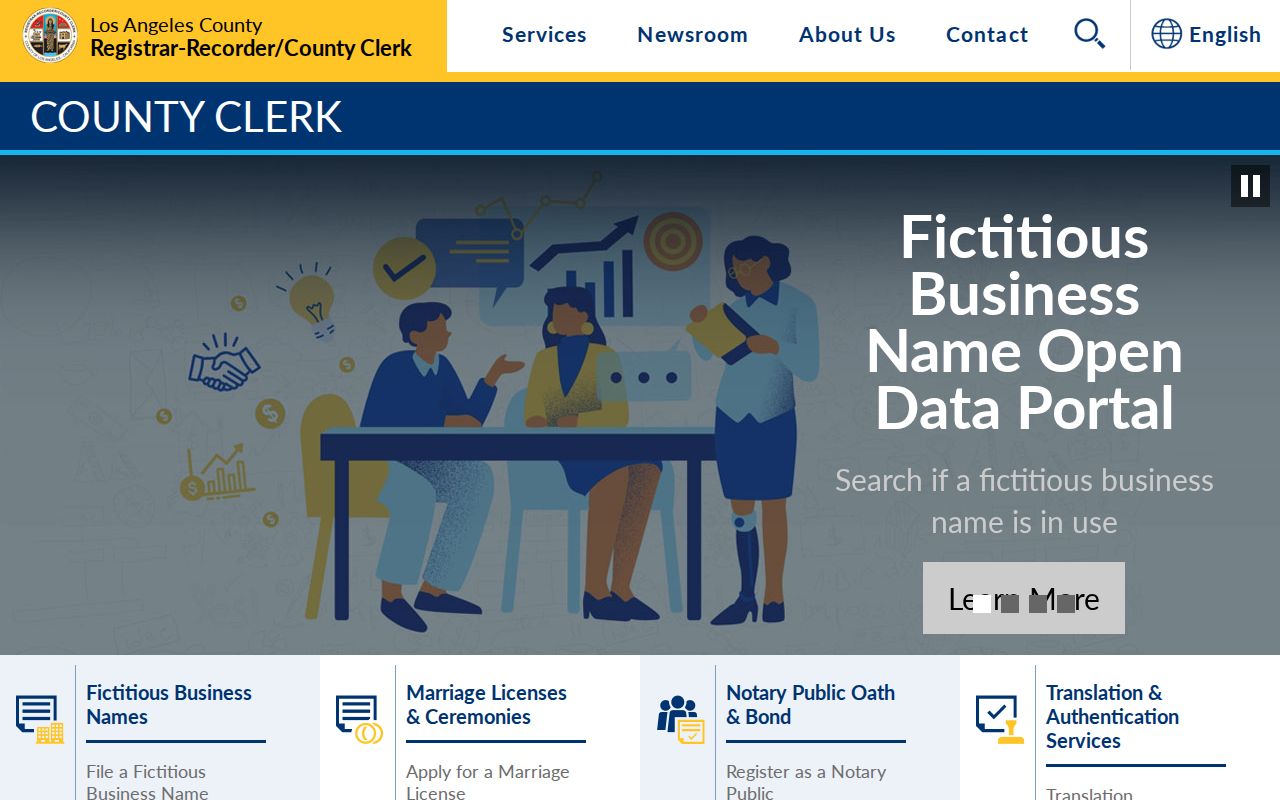
Match each ZIP clue to a record type and its custodian before you chase it further.
Street Index Data Is Regulated
LA County charges for voter files, precinct and city information, and street-index pages. It posts the fee schedule openly. The rules matter as much as the dollars. The county says public Street Index pages may be used for political purposes only. Each page carries its own charge plus a handling fee. That product is separate from the voter self-check. It also cannot be repurposed as a general Montebello ZIP code directory, whatever a requester calls it.
The published figures include a $146 county voter file and a $54 first file covering precinct, district, or city information. Each additional file costs $39. Street-index pages run $0.10 per page with a $1.60 handling fee. The fees describe products and permissions, nothing more. They promise no result. Any given street or ZIP lookup may simply be unavailable to a requester. That happens when the requester does not qualify under the county's terms.
County voter-file fees and products are the authoritative access note.
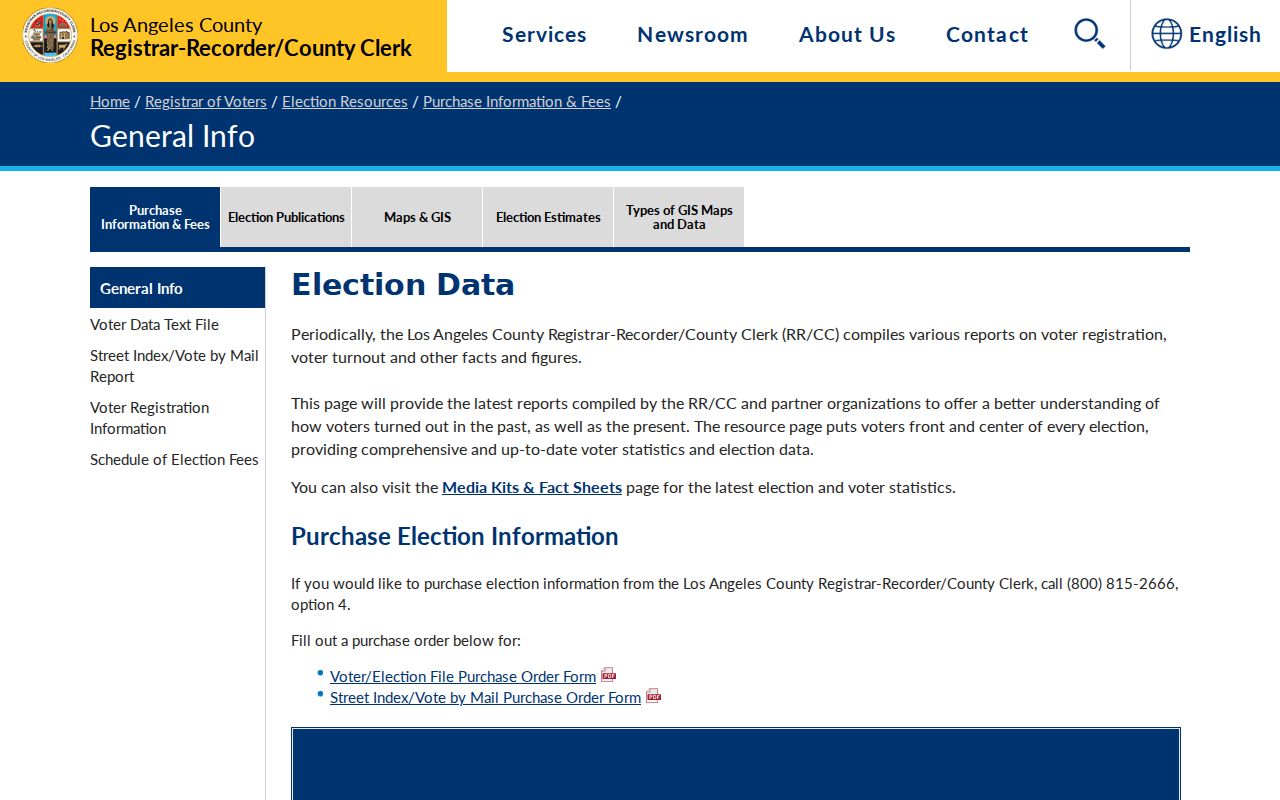
The fee capture shows why ZIP-wide or street-wide visibility must stay within the county’s stated purpose and request rules.
Older Montebello Addresses
ZIP codes are modern routing tools. They did not exist when Montebello's paper trail began. The county's land records open in 1850, and the city incorporated in 1920, so older documents lean on rancho names, tract numbers, lots, maps, and legal descriptions instead of postal codes. A 1925 Sanborn atlas, historical city directories, census schedules, newspapers, and deeds can pin down an address that carries no useful ZIP at all.
Keep the old identifier apart from the modern one. Find the historical line first. Then match its land description or map footprint against today's AIN. The ZIP code directory earns its keep for present-day postal normalization, while city directories and past-residents research own the backward trail through Montebello.